A traditional pipe organ is desirable for its versatility, magnificent architectural features, pure and vast array of sounds in contrast to the digital sounds of other modern instruments. In addition, a custom built organ makes the best use of the unique acoustics in your church buildings and architecture. Custom pipe organs are designed for churches, concert halls, and institutions seeking an instrument that is uniquely suited to their space, musical goals, and long-term needs.
However, some churches may choose to purchase an existing organ from a different church and modify it to suit the new buildings acoustics. This can be effective in certain cases where the instrument itself is of great historic and musical value. Otherwise, the church may find out possibly a little too late that the recycled pipe organ does not complement the new building’s space fully.
Ultimately, a well built custom organ has the potential to inspire a congregation and elevate the quality of the music enabling members to make a deeper connection with the divine in daily or weekly services.
Our organs incorporate traditional old world European craftsmanship with modern designs and cutting edge technology at an affordable price.
In contrast, larger firms that have to pay high overhead costs often put customers in precarious financial positions with cost overruns despite initial promises they make to the contrary. Our strong record of being a 100% on budget and on schedule in all of our major restoration projects gives our customers peace of mind and an assurance that their funds are going to be utilized as planned.
Moreover, our company’s decades of experience in servicing organs has given our staff the intimate knowledge of design/technical flaws of a variety of contemporary and historic organ builders. Our cross trained staff have honed their ability to solve problems created by such flaws. This accumulated knowledge enables us to build organs that require minimal service and when in need of attention will be easily serviceable.
Ultimately, a well built custom organ has the potential to inspire a congregation and elevate the quality of the music enabling members to make a deeper connection with the divine in daily or weekly services. ( Read more : Blessing of the pipe organ – New Organ Dedication)
Finally, for the past few decades we have honed our skills on organ restorations and are poised to build complete custom organs from the ground up! We welcome an opportunity to be of service in building your affordable custom pipe organ. From initial consultation and design to final installation and voicing, we guide each client through every stage of the organ-building process.
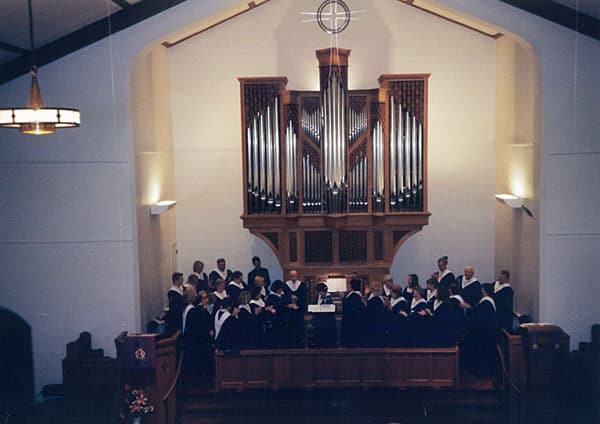
Concern over the condition of the former 1922 Skinner organ prompted the Session in 1970 to seek outside advice. Three consultants working entirely independently of each other submitted evaluations which concurred that the organ’s tonal design, placement within the sanctuary, and physical condition did not merit any major revision or repair.
Consultants were Dr. Fenner Douglas, Professor of Organ, Oberlin College Conservatory of Music; Dr. Homer Blanchard, Ohio Wesleyan University; and Kurt F. Ruhland, The Ruhland Organ Co., Cleveland OH.
Both Drs. Fenner and Blanchard recommended investigation of a new instrument, free standing and more varied in tonal resources than the Skinner Organ, and one with tracker action.
Click here to learn more about the First Presbyterian Church case study.
The Session had started an organ fund in 1968 with money from bequests and funds from the congregation’s 125th anniversary celebration in 1980.
On November 2, 1980, a committee was established to set goals, timetables, and raise funds to acquire a new sanctuary organ. The committee reviewed the recommendations of the consultants and established specifications for the new instrument.
Bids were solicited from 10 organ builders and John Leek’s bid was selected after visiting his workshop in Oberlin. In 1981, a contract was signed with Mr. Leek.
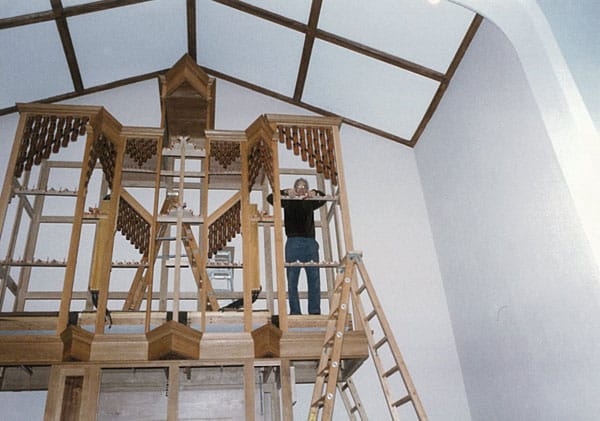
John went out of his way to secure the best components and woods for the pipe organ. 2,000 board feet of white oak was obtained from Virginia for the case, while 25-year-old black walnut was used to contrast with the oak.
The walnut screen and pipe shades covering the upper portion of the visible pipes were designed by Charles Lakofsky. The back panels and doors have white oak frames and redwood panels to give the organ a slightly darker tonal character.
The metal pipes were made in the Netherlands, with visible pipes composed of 75% tin and 25% lead, while concealed pipes contain higher lead content. Wooden pipes were made in Germany, including the Subbass 16′ in white pine and the Bourdon 16′ in Honduras mahogany.
The blower was imported from Switzerland. John built the keyboard using North European beech for the frame, polished cow bone for the white keys, and carved African ebony for the black keys. Stop knobs and decorative inlays were turned from Turkish boxwood.
The organ consists of 17 stops, 22 ranks, and 1,106 pipes. Construction was completed, and a dedication recital was held on April 21, 1985.
A custom-built pipe organ is designed specifically for your church’s acoustics, architecture, musical goals, and worship needs. Unlike a relocated instrument, a custom organ is planned to complement the space and provide reliable performance for generations.
The process typically includes an initial consultation, design planning, budgeting, construction, installation, voicing, tuning, and final testing. Leek Pipe Organ Company works closely with each client throughout every stage of the project.
The first step is to contact Leek Pipe Organ Company to discuss your goals, budget, and project requirements. From there, the team will guide you through consultation, planning, design, and construction.
Contact us by filling out the form below.
We are here to help you to improve the sound quality of your organ. Contact us as soon as possible .